

Options are marketed as a way to enhance returns, reduce risk, generate income, and improve portfolio efficiency.
Sometimes they do. But too often they don’t.
For many tax-sensitive, long-term equity investors, the first question shouldn’t be, “Which option strategy should I use?”
It should be:
Why use options at all?
A long-term investor in a diversified captial markets portfolio already possesses one of the most powerful advantages in investing: the ability to defer taxes while allowing capital to compound for years or even decades.
Options frequently work against that advantage.
Premium income is often taxable immediately. Positions invite monitoring. Trade costs accumulate. Complexity increases. And many option strategies ultimately exchange a portion of tax-efficient long-term compounding for a stream of taxable, stressful short-term activity.
That’s not a good trade.
In my experience, options are often oversold and their costs underappreciated.
Most investors don’t need more activity. They need more patience and reasonable diversification.
For many investors, buying a diversified portfolio of stocks and holding it for the long run remains the most effective strategy available.
When I do use options, however, I strongly prefer simplicity.
In fact, I think most investors need only consider three option strategies:
That’s it.
The appeal isn’t just that these trades are exciting and potentially profitable.
It’s that they’re understandable.
Before discussing specific strategies, a few definitions may help.
A call option is a bet on higher stock prices. It gives its owner the right to buy a stock at a predetermined price before a specified date.
A put option is a bet on lower stock prices. It gives its owner the right to sell a stock at a predetermined price before a specified date.
The predetermined price is called the strike price.
The specified date is called the expiration date.
In options terminology, long means you bought the option.
Short means you sold the option.
Put simply:
Most option strategies are simply combinations of these basic building blocks.
You’ll also hear traders discuss the “Greeks” , known as Delta, Gamma, Theta, Vega, and Rho, which are measures of how an option’s value may change as the stock price, time to expiration, and market volatility change. To keep it simple, the important thing to remember is that listed option markets are generally efficient. There is no free money lying on the sidewalk. If a strategy appears to generate easy income with little risk, look again. Many investors eventually discover they were picking up nickels in front of a bulldozer.
A working understanding of listed options is helpful. Actually using them is completely optional.
The options industry has a remarkable ability to make simple investing look complicated.
Attend almost any options seminar and you’ll quickly encounter iron condors, butterflies, calendars, diagonals, ratio spreads, collars, fences, straddles, strangles, and combinations with names that sound more appropriate for a cocktail menu than an investment portfolio.
I don’t believe complexity deserves a premium simply because it is complexity.
Every additional leg introduces:
A strategy should earn its complexity.
Most don’t.
A long call is one of the cleanest leveraged expressions of a bullish thesis.
If I’m bullish on a stock but want defined risk, a long call can make sense.
The maximum loss is known in advance. The upside can be substantial and realized quickly. Capital requirements are lower than purchasing shares outright.
Of course, long calls have drawbacks.
Time decay never sleeps.
You can be right about the company, right about the direction, and still lose money because your timing was wrong.
Still, when used selectively and with a clear thesis, long calls remain a straightforward tool.
Many investors describe long puts as insurance.
I’m not sure I see a sharp distinction between insurance and speculation.
Whenever we buy insurance, we’re making a judgment about future uncertainty. We are paying a known cost today because we believe the protection may prove valuable tomorrow.
A long put works much the same way.
What a put clearly accomplishes is the creation of a downside floor.
It can reduce volatility and limit losses during severe market declines.
But it does so at a cost.
The investor exchanges open-ended downside risk for a guaranteed premium expense and a defined downside floor.
That’s not risk elimination.
It’s risk transformation.
If I had to choose only one option strategy, it would probably be the cash-secured short put.
The concept is simple.
Sell a put on a stock you would genuinely like to own.
Set aside enough cash to purchase the shares if assigned.
Collect the premium.
If the option expires worthless, you keep the premium.
If assigned, you acquire a stock you already wanted, often at an effective purchase price below the market price when the trade was initiated.
The key phrase is this:
A stock you genuinely want to own.
Too many investors sell puts for income and only later think about ownership.
I prefer the opposite approach.
The investment thesis should come first.
The premium should be the bonus.
This is where I part company with many option investors.
Covered calls are often marketed as conservative income strategies.
In reality, the investor is selling a portion of the upside in exchange for a relatively small premium.
Many investors describe the primary risk as assignment.
I disagree.
Assignment is not a separate risk.
Assignment is simply how the risk manifests itself.
The actual risk is forfeiting substantial upside in a successful investment.
Suppose you own a stock at $100 and sell a covered call with a strike price of $110.
The stock rises to $140.
You receive the premium and participate in the gain from $100 to $110.
But the gain from $110 to $140 belongs to someone else.
The assignment itself isn’t the problem.
The problem is that a successful investment became less successful because its upside was capped.
Some of the greatest investing outcomes come from a relatively small number of exceptional winners. Covered calls systematically sell away part of that possibility.
For investors prioritizing current income, that trade-off may be acceptable.
For investors prioritizing long-term wealth creation, I’m often skeptical.
My philosophy regarding options is the same philosophy I apply to investing generally.
The default option strategy for most tax-sensitive, long-term investors is often no option strategy at all.
But when options are appropriate, I prefer simplicity over cleverness and avoid overtrading.
Long calls.
Long puts.
Cash-secured short puts.
Three strategies. Clear risk profiles. Easy to understand.
For most investors, that’s more than enough.
Successful Portfolios is an independent SEC-Registered Investment Advisor based in Clearwater, Florida.
Founded in 2010 by Parker Evans, CFA, CFP, and Joe Baer, APMA, we remain dedicated to guiding investors with complete transparency and the highest level of care.
As fee-only fiduciary advisors, we’re committed to helping you grow and protect your wealth.
Every financial journey is unique. Contact us for a free consultation, and let’s build a personalized investment plan for you and your family.
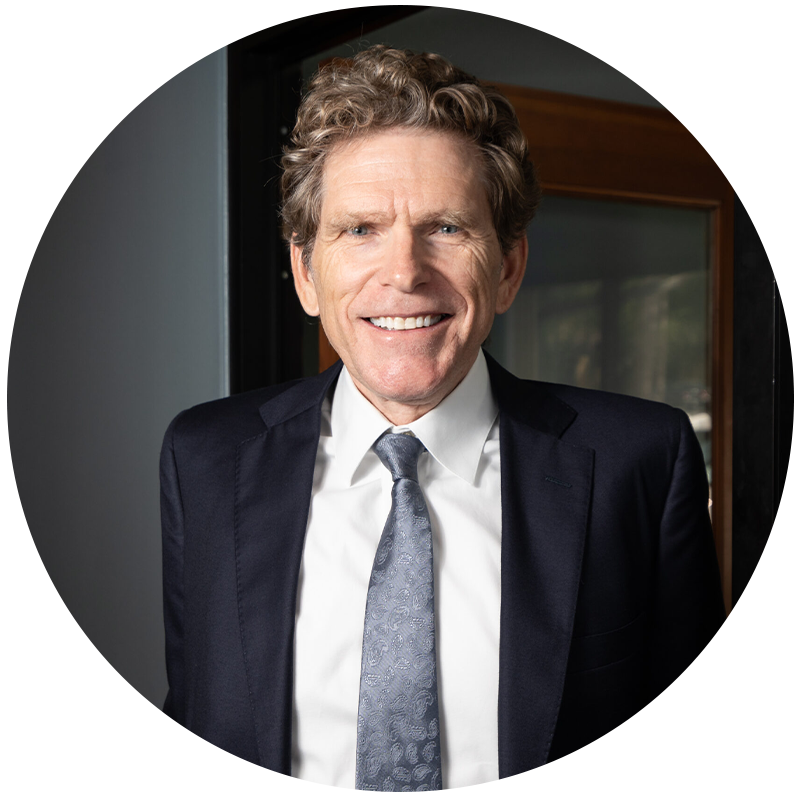
Parker Evans, CFA, CFP
President, Chief Investment Strategist

Joe Baer, APMA
Client Advisor, Portfolio Manager